Request an Appointment

What Are Some Must-Haves for Cleaning Braces and Aligners?
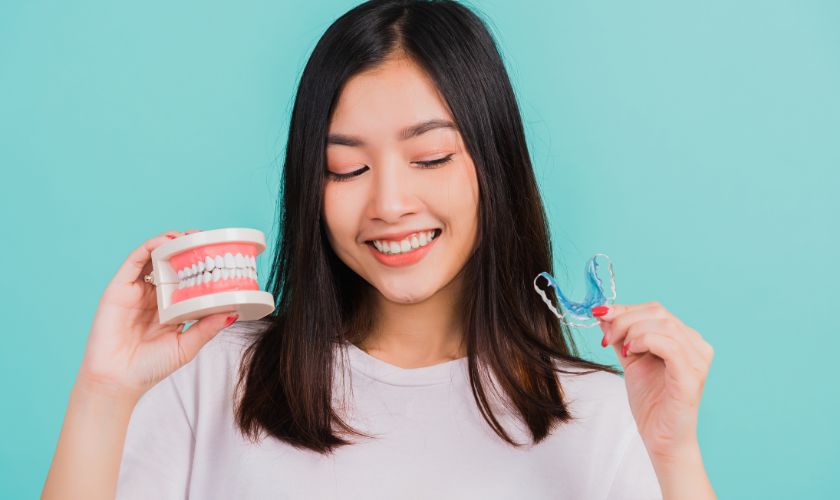
When the majority of our Carrollton patients think of orthodontic treatments, like braces or aligners, they focus on the aesthetic value of having straighter teeth. While corrected crooked teeth can certainly make you more confident in your smile, orthodontic treatments also do more than that.
Braces or aligners can correct bite issues by fixing misalignments of the teeth and jaw. This makes it easier for you to chew, bite, and even speak. Plus, crooked teeth can be harder to clean, increasing your chances of developing cavities, gum disease, or other oral health problems.
When you get braces or aligners, caring for your dental appliances is essential to maintain the health of your teeth and gums. Luckily, there are a variety of products that your Carrollton dentist can recommend that can make that job easy. If you aren’t sure what are the must-haves for caring for braces and aligners, here’s what you need to know.
The Basics: Toothbrush, Toothpaste, and Floss
If you want to keep your braces and aligners clean, a toothbrush, toothpaste, and floss provide a solid foundation. Brushing your teeth helps remove food particles and plaque from the surface of your teeth and your braces, while floss removes debris from the spaces between your teeth. If you use an aligner, brushing it with toothpaste also removes particles from the aligner itself, ensuring they don’t end up pressed against the surface of your tooth.
Since braces and aligners make it easier for food particles to stay trapped against your tooth surfaces, brushing and flossing are essential. Here’s a breakdown of the basics:
- Toothbrush: A soft-bristle toothbrush is recommended, as it can clean around the brackets without damaging them. For those using aligners, brushing your teeth and the aligner itself is essential to remove food particles.
- Toothpaste: Opt for fluoride toothpaste to strengthen enamel and prevent cavities, which is especially important when wearing braces or aligners.
- Floss: Regular flossing helps remove trapped food particles. For those with braces, a floss threader can make it easier to get floss around the wires and under the gums.
To make flossing easier if you are wearing braces, either invest in some floss threaders or find specialty floss with stiff ends. This allows you to use the floss near the gum line since you can guide it between your teeth even with the wire in place.
Interproximal Brushes
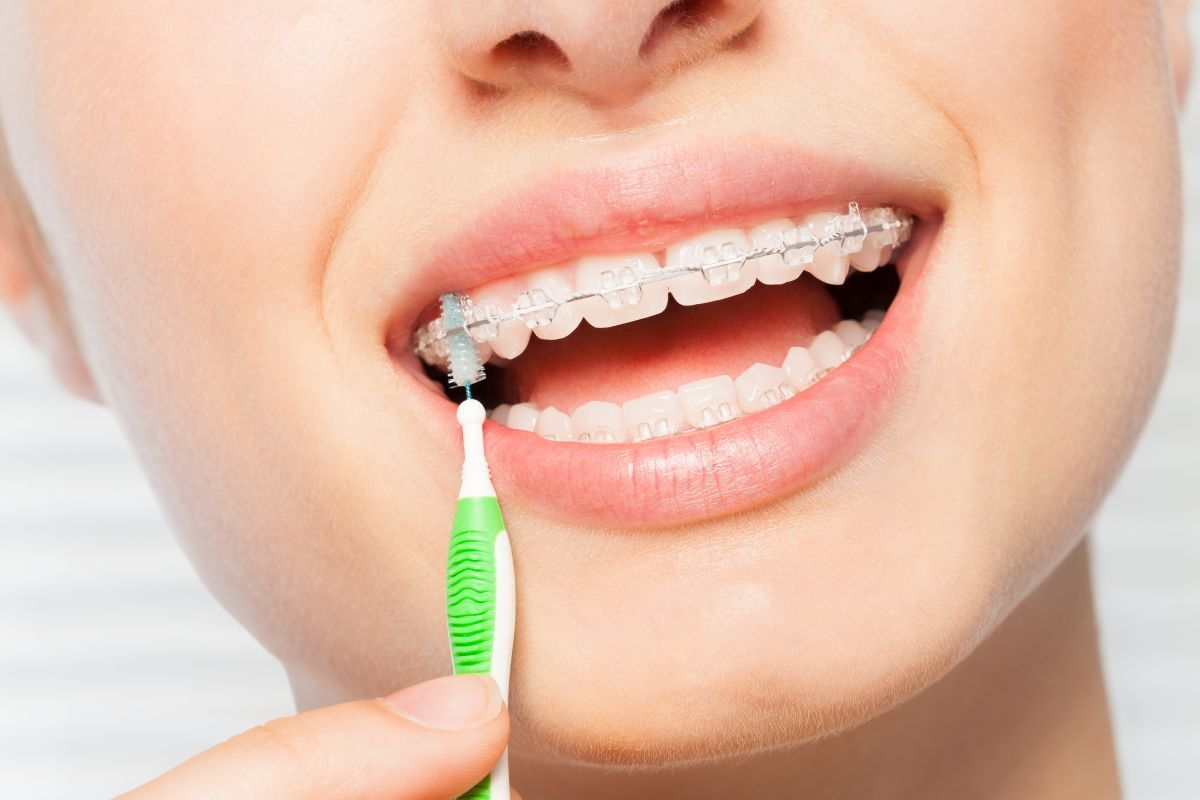
When you have braces, interproximal brushes can be a lifesaver. These mini-toothbrushes are designed to clean around the brackets and under archwires, allowing you to ensure that no food or plaque gets trapped in hard-to-reach areas.
Interproximal brushes come in a variety of sizes, so you can find one that fits comfortably between your brackets or teeth. Plus, if you have gaps between your teeth when you start treatment, these brushes can be used to clean those spaces thoroughly. They’re small, portable, and incredibly effective at keeping braces clean.
How to use them:
- Gently insert the brush between your teeth and the wire.
- Move it back and forth to remove any debris or food particles.
- Rinse the brush after each use to keep it clean.
Denture Cleaner for Aligners
If you use aligners to straighten your teeth, denture cleaner is a must-have. Aligners, much like braces, can trap food particles and bacteria, which can lead to discoloration or bad odors if not cleaned properly.
Denture cleaning tabs offer a simple solution. You can soak your aligner in the cleaning solution, ensuring all lingering food particles and plaque are removed. After a good soak, use a toothbrush to remove any loosened debris before rinsing the aligner. Denture cleaners can also help remove stains, ensuring your aligner stays clear and doesn’t impact the appearance of your teeth.
How to clean aligners with denture tabs:
- Drop one cleaning tablet into a cup of warm water.
- Place your aligner in the cup and let it soak for 15–20 minutes.
- After soaking, brush and rinse the aligner before putting it back in your mouth.
By soaking your aligner daily, such as during meal times at home, you can keep your orthodontic appliance clean and fresh.
Orthodontic Wax
For anyone with braces, orthodontic wax is another must-have product. As your mouth adjusts to the brackets and wires, you may experience irritation, especially in the first few weeks of wearing braces. Orthodontic wax can help protect the soft tissues inside your mouth, providing relief from any rubbing or discomfort caused by the metal components.
How to use orthodontic wax:
- Take a small piece of wax and roll it into a ball.
- Press the wax onto the bracket or wire that’s irritating.
- The wax will act as a barrier between the metal and your mouth, preventing cuts or sores.
Orthodontic wax is clear and easy to apply, making it a quick solution for anyone experiencing discomfort from braces.
Water Flosser
For those who find traditional flossing difficult, especially with braces, a water flosser can be an excellent alternative. Water flossers use a stream of water to clean between the teeth and around braces, dislodging food particles and plaque.
Water flossers are easy to use and can reach areas that traditional floss might miss, making them particularly helpful for those with braces or aligners. They’re gentle on the gums and can be used daily to maintain good oral hygiene.
Benefits of using a water flosser:
- Reaches areas between the wires and teeth.
- Reduces the risk of gum disease.
- Easy to use, especially for those with braces.
Conclusion
Caring for your braces and aligners is crucial to ensure the health of your teeth and gums during orthodontic treatment. By investing in the must-haves above—such as a good toothbrush, floss, interproximal brushes, denture cleaner, orthodontic wax, and a water flosser—you can be fully prepared to care for your teeth and orthodontic appliances.
Maintaining proper oral hygiene is essential to avoid cavities, gum disease, and staining. Whether you’re using braces or aligners, these tools will help keep your smile healthy and bright, setting you up for success when your orthodontic treatment is complete.
If you have any questions about how to care for your braces or aligners, don’t hesitate to contact your Carrollton dentist for personalized recommendations!