Request an Appointment

Best Way To Maintain Dentures Without Damaging Them
Let’s be honest: when you first got your dentures, nobody told you it would feel a bit like owning a high-maintenance sports car. They look great, they help you enjoy that steak you’ve been eyeing, and they give you your confidence back. But then reality hits—how do you keep them sparkling clean without accidentally snapping a clasp or warping the base?
If you’ve ever stood over the bathroom sink, gripping your dentures like they’re made of Ming dynasty porcelain, you aren’t alone. In fact, you’re part of a massive club. Recent data shows that approximately 42.46 million Americans will be using dentures by the end of 2025. That’s a lot of smiles to look after!
Whether you’re a “newbie” still adjusting to the feel or a seasoned pro, maintaining your dentures doesn’t have to be a high-stress gamble. In this guide, we’re going to break down the science of denture care—using the latest 2026 data and expert-backed tips—to ensure your investment lasts for years. Ready to protect that grin?
The High Stakes of Denture Care: Why Maintenance Matters
It’s easy to think of dentures as “set it and forget it” appliances, but they are surprisingly delicate. According to a survey on denture fractures, a staggering 80.4% of denture damage is caused by “impact failure”—essentially, dropping them while cleaning (El-Sheikh et al.).
Furthermore, roughly 53.6% of damaged dentures fail within the first three years of use. When you consider that the average cost of a quality set can run into the thousands, and the restorative dental market in the U.S. is projected to grow toward $44 billion by 2030, “oops” is an expensive word to say.
Proper maintenance isn’t just about saving money; it’s about your health. Poorly cleaned dentures harbour bacteria that can lead to stomatitis (redness and inflammation) or even systemic issues.
Golden Rules to Maintain Dentures without Damage
Brush Every Day (Gently but Thoroughly)
Just like natural teeth, dentures collect plaque, food particles, and bacteria. Without proper cleaning, these can lead to irritation, bad breath, and gum inflammation. Plaque buildup on dentures is common, affecting about 30% of wearers.
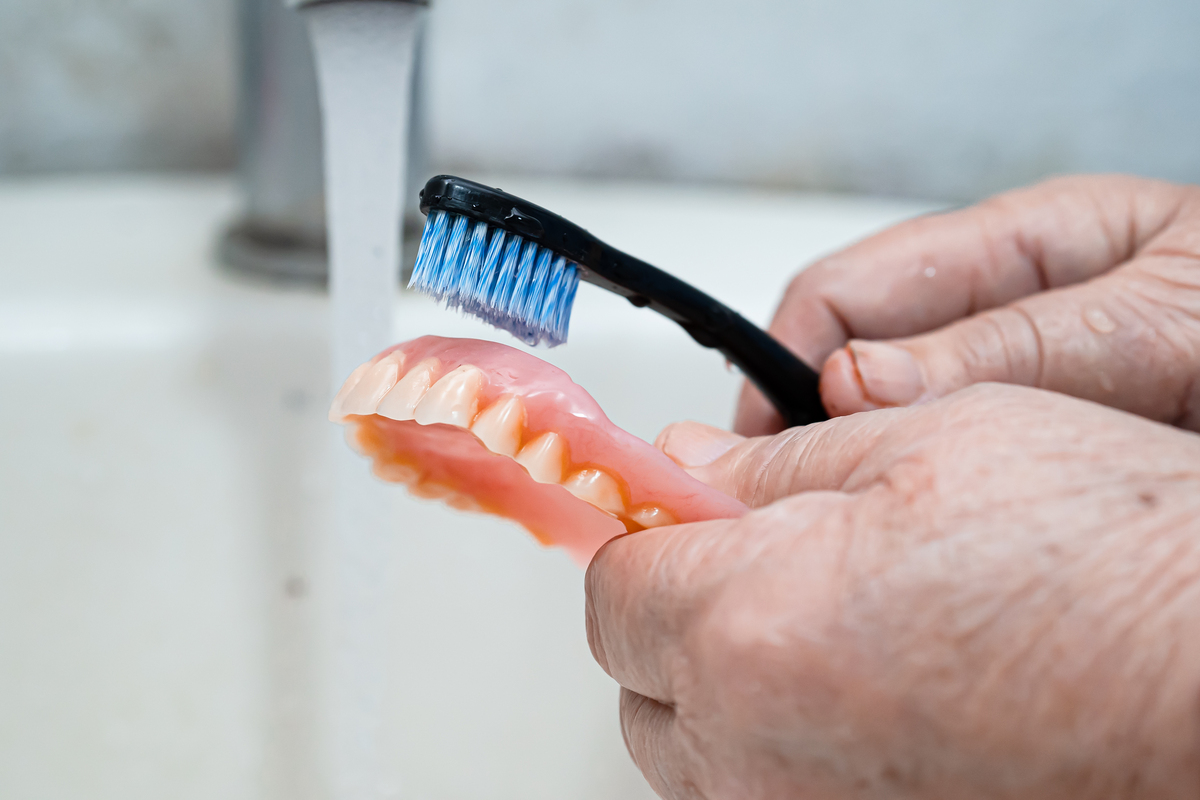
How to brush the right way:
- Remove dentures before brushing.
- Use a soft-bristle denture brush or soft toothbrush.
- Avoid regular toothpaste—it’s often too abrasive for denture materials.
Pro tip: Brush them over a folded towel or sink filled with water—just in case they slip.
Rinse After Every Meal
Rinsing removes loose food debris and keeps your dentures looking fresh. It’s a simple habit with a big payoff—especially for partial denture wearers who may have natural teeth still in place.
Soak Overnight
Dentures need moisture to retain their shape and flexibility. Let them dry out, and the acrylic can become brittle—which leads to cracks or warping.
- Recommended: Soak overnight in lukewarm water or a denture-cleansing solution.
- Avoid: Hot or boiling water—it can warp your dentures.
Don’t Wear Them 24/7
Your gums and oral tissues need a break. Removing dentures at night:
- Reduces the risk of mouth sores
- Lowers bacterial load
- Helps minimise denture-related stomatitis (inflammation).
Cleaning Tools That Preserve Integrity
When cleaning your dentures, the goal is effective cleansing without scratching or damaging the material.
Safe Options
- Soft-bristle denture brush or soft toothbrush
- Denture-specific cleansers (tablets, pastes)
- Mild hand soap or dish soap if denture cleanser isn’t available
Things to Avoid
- Regular toothpaste
- Whitening toothpaste (contains peroxide)
- Household bleach or abrasive cleaners
Abrasive substances don’t just scratch—they can embed bacteria or discolour the acrylic.
How to Handle Biofilm & Plaques
Biofilm is more than invisible gunk—it’s a community of bacteria that clings to surfaces. Without daily removal, it contributes to oral infections and bad odour. The American College of Prosthodontists strongly recommends daily brushing and soaking with non-abrasive cleansers to reduce biofilm and harmful microbes.
When to Visit Your Dentist
Just like natural teeth, dentures benefit from professional checkups:
- Every 6 months—to inspect fit and cleanliness
- When you notice pain, looseness, or sores
- If dentures show signs of wear
Your oral health professional can check:
- Gum health
- Denture fit
- Cracks, chips, or areas of concern
Failing to see your dentist can result in irritation and infection that’s preventable.
Tips to Avoid Damage
- Avoid Hot Water: Exposure to heat causes distortion.
- Watch Adhesive Use: Adhesives can help, but overuse isn’t a solution for a poor fit. If you find yourself using more and more adhesive, talk to your local certified Carrollton dentist.
- Avoid DIY Repairs: Don’t glue or adjust dentures yourself. These quick fixes often cause more harm than good.
Interesting Denture Wearer Insights
Caring for dentures isn’t just about cleaning—they’re tied to real daily experiences:
- 56% of denture wearers avoid certain foods due to fit or comfort issues.
- 78% believe they take good care of their dentures, yet 89% fail to clean them properly.
That disconnect highlights why guidance like this blog matters. Education and proper habits not only extend denture life but also enhance self-confidence and social comfort, too.
Denture Longevity & What to Expect
Even with great care:
- 50% of dentures need replacement every 5–7 years.
That’s normal wear and tear—years of chewing, cleaning, and daily use will eventually take a toll. The key is maintenance in between to delay replacement as much as possible.
Quick Checklist: Daily Denture Care Routine
- Rinse after eating
- Brush at least once daily
- Soak overnight
- Handle with care
- Regular dental checkups
By practising this routine consistently, you’re giving your dentures their best shot at a long, healthy life.
Conclusion
Maintaining your dentures doesn’t require a degree in engineering—just a bit of consistency and the right habits. By avoiding abrasive cleaners, skipping the boiling water, and always using a “safety net” in the sink, you can keep your smile looking brand new for the recommended 5-to-7-year lifespan of the appliance. Remember, your dentures are an investment in your quality of life. Treat them well, and they’ll return the favour every time you sit down for a meal or smile for a photo.
Frequently Asked Questions
1. How often should I clean my dentures?
Clean them daily—preferably after meals and again at night. Rinse after eating and brush at least once per day with a soft brush.
2. Can dentures get mouldy if not cleaned?
Yes. Bacteria and fungi can accumulate, leading to odours, irritation, and infection if dentures aren’t cleaned regularly.
3. Is toothpaste safe to use on dentures?
No. Most toothpastes are too abrasive and can scratch the denture surface. Use denture cleansers or mild soap instead.
4. Do I need to remove my dentures at night?
Yes—removing them gives your gums a chance to rest and reduces the risk of sores and infection.
5. How often should dentures be replaced?
Most dentures are replaced every 5–7 years, even with great care.